
Gift card scams don't depend on a single broken payment system. They succeed when authorization, redemption, refund, and dispute processes operate separately, giving an attacker time to move value before anyone connects the events. The FTC reported that nearly 40,000 people reported $148 million stolen through gift cards during the first nine months of 2021 in its gift card fraud data spotlight. From January 2018 through September 2021, 26.6% of consumers who reported losing money to fraud said gift cards or reload cards were involved, making them the most frequently reported payment method in that dataset.
The useful question isn't only whether a gift card transaction looks suspicious. It's where the abuse enters, what behavior signals it creates, and which control can interrupt it before value disappears. The seven paths below cover purchase, promotion, redemption, refund, balance checking, resale, and social engineering, with actions for both consumers and merchants. Examples are illustrative scenarios, not independently verified case studies. For platforms handling signups, checkouts, logins, credits, or redemptions, Portreeve is one relevant inline screening option.
Table of Contents
- 1. Fraudulent Gift Card Purchase via Stolen Payment Methods
- 2. Account Cycling with Burner Emails for Promotional Gift Cards
- 3. Fake Gift Card Redemption for Money Laundering
- 4. Refund Fraud Using Gift Cards as Intermediaries
- 5. Gift Card Balance Checker Exploitation and Harvesting
- 6. Reselling Stolen Gift Cards Across Multiple Platforms
- 7. Social Engineering and Phishing for Gift Card Codes
- 7-Point Gift Card Scam Comparison
- Turn Scam Signals Into Fast Decisions
1. Fraudulent Gift Card Purchase via Stolen Payment Methods
A stolen card can buy a gift card in seconds, while the legitimate cardholder may not notice the charge until later. The attacker then redeems or resells the gift card before authorization problems, fraud alerts, or chargebacks reach the merchant. The gift card becomes a fast conversion layer between compromised payment credentials and a transferable digital asset.
A typical pattern might involve several high-value Amazon purchases using one card fingerprint, multiple accounts, and unrelated devices. Another may involve repeated Apple or Google Play purchases across accounts, followed by immediate redemption or resale. These examples illustrate the signal, not a verified case study.
Signals that matter at checkout
A billing and shipping mismatch isn't proof of fraud, especially for digital delivery, but it becomes more useful when combined with card reuse, unusual velocity, new accounts, or device changes. Merchants should evaluate the transaction as part of an identity cluster rather than relying on the email address attached to one order.
Useful controls include:
- Reuse detection: Track the same card fingerprint across gift card purchases, accounts, devices, and payer wallets.
- Velocity rules: Limit purchases by card, device, email, and wallet over a defined rolling period.
- Step-up authentication: Require CVV re-entry or 3D Secure when the transaction conflicts with established behavior.
- Manual review: Hold unusual digital delivery or high-risk combinations instead of approving them automatically.
- Evidence retention: Keep authorization, redemption, device, and refund events connected for later disputes.
A practical explanation of why repeated payment artifacts matter appears in this guide to card testing attack patterns.
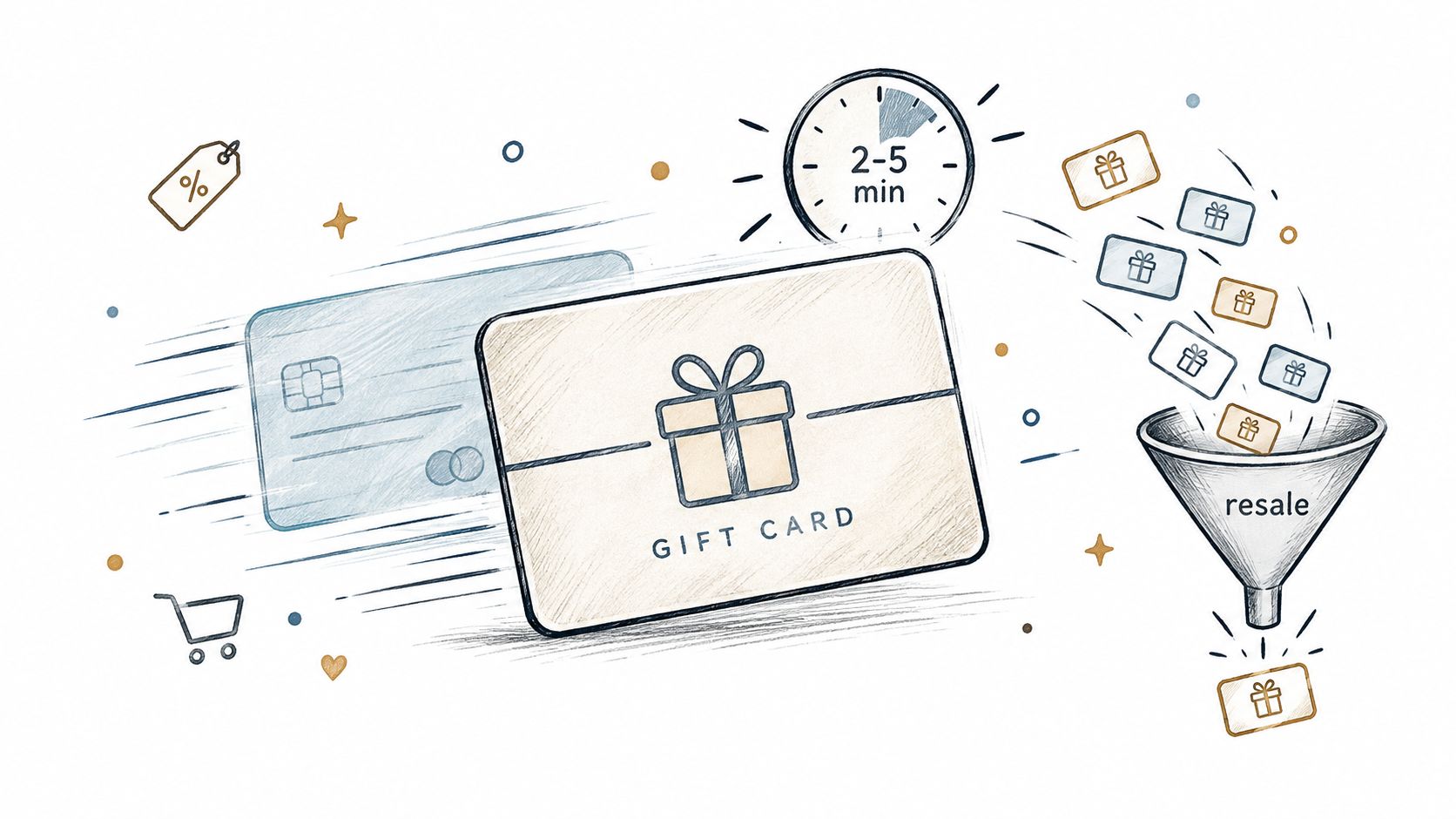
Portreeve's card fingerprint identity key can help platforms link related checkout attempts before payment capture. The decision should still reflect the merchant's own rules, card network signals, and customer context.
2. Account Cycling with Burner Emails for Promotional Gift Cards
Promotional gift cards create a different failure point. The attacker doesn't need a stolen payment card if a service grants value at signup. Disposable email addresses let one person create many apparently unrelated accounts, claim welcome credits, and leave before the platform measures meaningful engagement.
Consider an AI service that grants promotional credits. A fraudster can register accounts with burner addresses, connect activity through the same device or payer wallet, consume compute, and repeat. A subscription business faces the same pattern when a welcome gift card can be claimed again and again without a reliable link between accounts.
Why email-only controls miss the pattern
A new email is a weak identity signal. Device tokens, IP context, payer wallets, signup timing, and post-claim behavior provide stronger evidence when combined. A user who claims a promotion and never returns is not automatically abusive, but a cluster of such accounts sharing a device and appearing within a short period deserves review.
Platforms can reduce promotional leakage by:
- Checking disposable domains: Maintain a current list and route high-risk signups to verification rather than relying on domain blocking alone.
- Linking identities: Correlate email, device, wallet, and account events across a rolling history.
- Adding friction selectively: Require phone verification or delay redemption when the account is part of a suspicious cluster.
- Capping claims: Enforce limits per device, wallet, and linked identity, not only per email.
- Measuring redemption quality: Compare claimed value with later login, payment, and product use.
The operational challenge is distinguishing a household or shared workplace from coordinated abuse. A review queue is safer than a blanket block when several legitimate users may share a network. Portreeve's explanation of disposable email domains and abuse patterns provides relevant context for that screening decision.
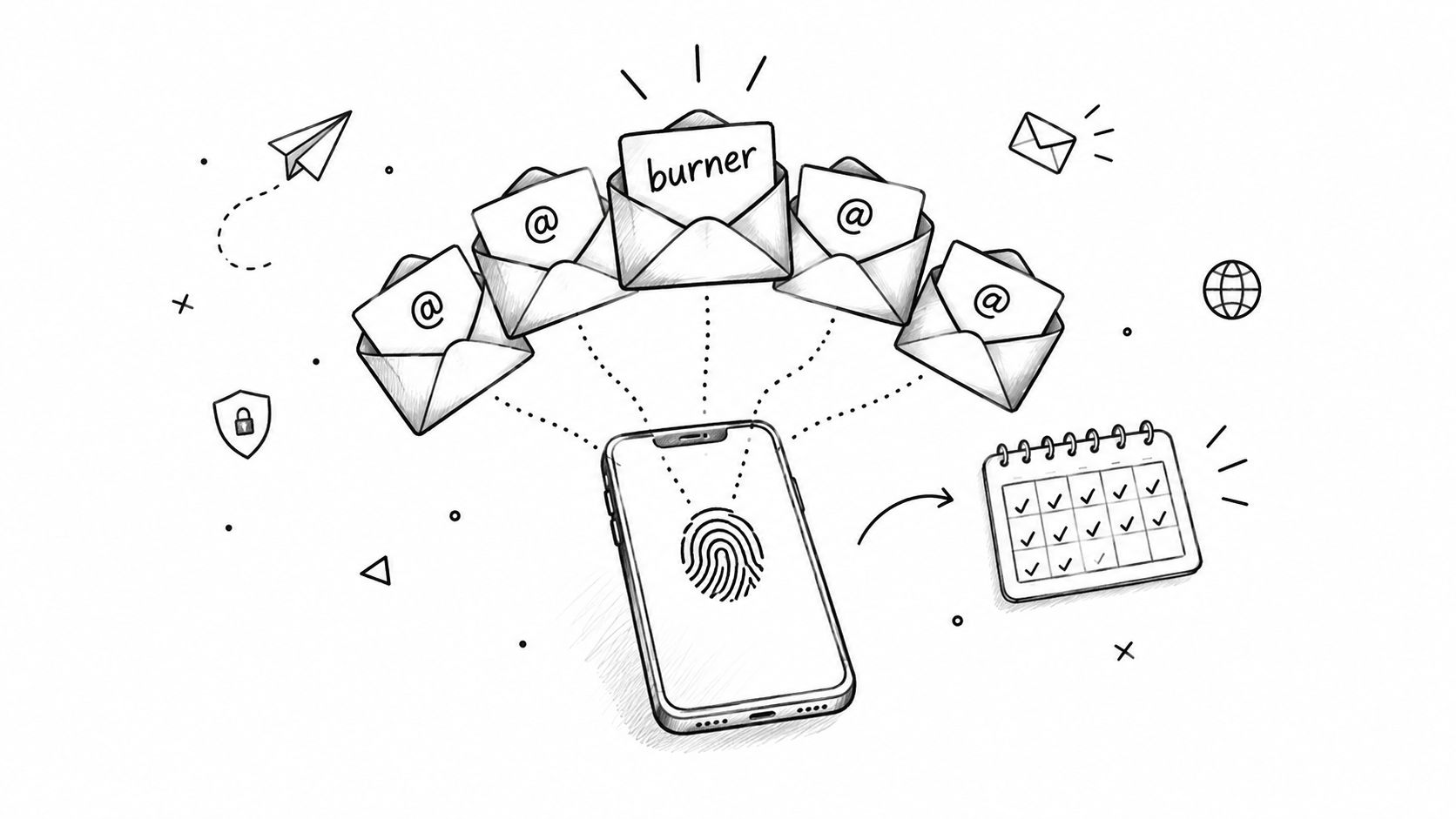
A delayed promotional redemption can give a platform time to connect signals before value becomes transferable. It also reduces the pressure to make a perfect decision at signup.
3. Fake Gift Card Redemption for Money Laundering
Gift cards can serve as a bridge between illicit funds and ordinary-looking platform activity. Someone may acquire cards using proceeds from another offense, move them through a marketplace or SaaS product, and redeem or resell them as credits, goods, or apparently legitimate transactions. The platform may see only a purchase and a redemption unless it links the full sequence.
The strongest signal is often speed combined with inconsistency. A newly created account buys or receives value, transfers it immediately, uses a VPN or proxy, and attempts to liquidate through another account. Geographic disagreement between the user's location and payment origin adds context, but it shouldn't stand alone as a block reason.
Build a transaction timeline
A useful investigation connects:
- Identity creation: When the account, email, device, and payment artifact first appeared.
- Funding: Which method purchased or loaded the gift card.
- Movement: Whether the value was transferred, resold, or converted soon afterward.
- Destination: Which accounts, merchants, or wallets received the value.
- Resolution: Whether a refund, dispute, or account recovery request followed.
High-value activity may justify KYC or enhanced verification, subject to the platform's legal obligations and risk model. Accounts that attempt trading soon after signup can enter manual review, while repeated linked activity can trigger a cluster-wide control. Platforms should retain an audit trail that supports internal investigation and lawful requests.
A fraud team can use fraud detection software to organize these signals, but software doesn't replace governance. Teams still need clear escalation rules, access controls, retention policies, and a documented process for handling false positives.
Operational rule: Treat rapid purchase-to-liquidation movement as a timeline problem, not as an isolated redemption event.
The objective isn't to label every fast transaction as laundering. It's to make unexplained movement visible while preserving a review path for legitimate resellers and business customers.
4. Refund Fraud Using Gift Cards as Intermediaries
Refund fraud appears after the original purchase, which makes it easy to miss if the payments team and customer support team use separate records. An attacker may buy a gift card, request a refund or credit, redeem the value, and then dispute the original payment. The merchant can lose the card value, the refunded amount, and the original payment.
Another version starts with a legitimate purchase. The customer receives a gift card refund, claims the credit is invalid, and asks for cash while the original gift card remains usable. A coordinated group can distribute these requests across accounts, making each one appear ordinary until the merchant links the payer, device, wallet, and timing.
Reconcile before releasing value
The key control is to tie every refund to the original funding method and current redemption state. A refund request should answer whether the card was redeemed, transferred, partially spent, or connected to a payment artifact already associated with disputes.
Merchants can apply several safeguards:
- Refund to the original method: Avoid creating a new cash-out path when the source transaction is still unresolved.
- Hold suspicious refunds: Delay release when the purchase is recent, the payment artifact is risky, or the card has been redeemed.
- Authenticate the requester: Require account verification before changing the destination of a refund.
- Cluster repeated claims: Link refund requests by wallet, device, card fingerprint, and account history.
- Monitor post-redemption disputes: Treat a chargeback after redemption as a connected event, not a separate complaint.
The right holding period depends on the payment method, product, and applicable consumer rules. A fixed delay can inconvenience legitimate customers, so merchants should reserve stronger friction for transactions with multiple risk signals.
Support agents also need a consistent script. They should verify the original order, record the card status, avoid revealing sensitive balance information, and escalate possible account compromise before issuing a second form of value.
5. Gift Card Balance Checker Exploitation and Harvesting
A balance-check page can become an oracle for stolen codes. Automated requests test whether a code is valid, active, or funded. Once an attacker identifies useful cards, they can redeem or resell them, while the merchant sees a series of small-looking balance queries rather than an obvious purchase attack.
The important distinction is between normal customer checking and machine-driven enumeration. A customer may check one card after purchase. An attacker checks many codes, changes account identities, sends requests without human think-time, or repeats the same request pattern across retailers and sessions.
Protect the endpoint, not only the card
Balance checking should have its own abuse controls:
- Rate-limit requests: Apply limits by IP, session, account, device, and other available signals.
- Require authentication where appropriate: Log each query against a user identity instead of exposing an unrestricted public endpoint.
- Detect automation: Look for consistent timing, repeated request shapes, data-center traffic, and failed-code bursts.
- Add progressive friction: Use CAPTCHA, exponential backoff, or temporary locks when enumeration behavior appears.
- Separate error responses: Don't reveal more validity information than the customer needs.
- Alert on cross-account activity: Review one source checking cards tied to unrelated accounts or retailers.
A rate limit alone won't stop a distributed botnet. Attackers can spread requests across addresses and accounts, so the service needs linkage across devices, sessions, and identities. Conversely, an overly aggressive limit can harm legitimate customers who are checking several cards received as gifts.
The safest design treats balance checking as a sensitive transaction. Log it, protect it, and connect it to later redemption, resale, and support events.
6. Reselling Stolen Gift Cards Across Multiple Platforms
Resale creates a chain of exposure. A stolen code may appear on a marketplace, a social platform, a reseller site, and a digital service before anyone identifies the original compromise. Each platform can become both a distribution channel and a victim, especially when the attacker uses stolen payment credentials to acquire more inventory.
A new seller who lists many cards immediately, uses inconsistent regional payment details, and changes accounts after a dispute presents a stronger signal than any single listing. The same device, wallet, or payout destination may connect supposedly independent sellers. Cross-platform movement also explains why one merchant may see only one suspicious transaction while the broader network sees a repeated pattern.
Verify provenance before enabling resale
Resale controls should focus on activation, ownership, seller identity, and movement of value:
- Confirm activation: Verify that a card is active and valid before listing or redemption, without exposing sensitive codes.
- Check regional consistency: Compare card origin, purchase context, account location, and payment geography.
- Stage seller permissions: Give new sellers lower limits until their activity establishes trust.
- Verify high-volume sellers: Request identity, payout, and address information where the business and law allow.
- Watch account age: Review accounts that create listings immediately after registration.
- Share signals responsibly: Coordinate with payment processors and industry partners under appropriate privacy and legal controls.
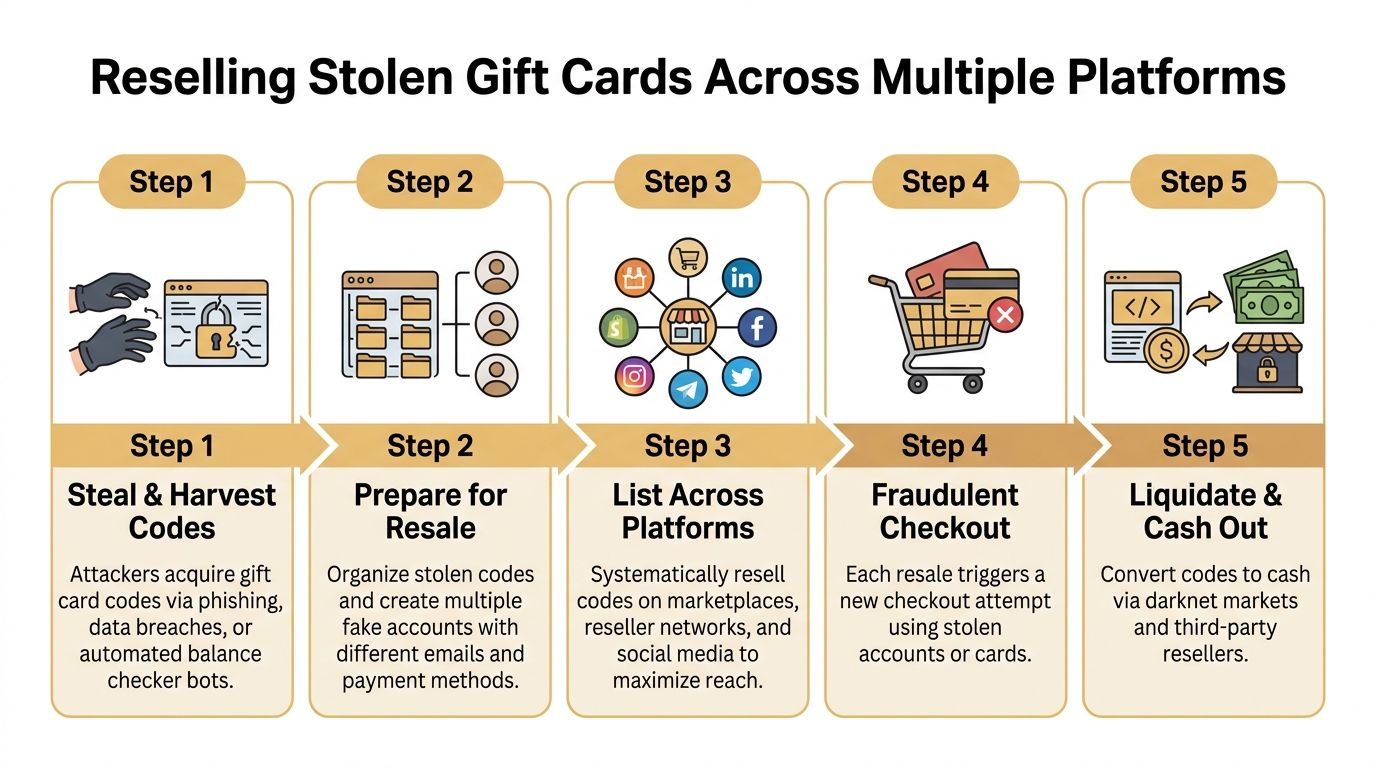
A platform shouldn't assume that a discount proves theft. Legitimate secondary sellers can have unusual inventory and cross-border customers. The decision should depend on linked evidence, transaction history, seller verification, and the ability to hold or reverse value safely.
7. Social Engineering and Phishing for Gift Card Codes
Social engineering attacks the person who already owns the gift card. The scammer may impersonate technical support, a government office, an employer, a retailer, or someone the victim trusts. The demand usually includes urgency and a request for the card number, PIN, receipt, or balance information. Once the victim shares those details, the attacker can redeem or resell the value.
The FTC reported that Apple cards were the most reported gift card brand in 2023, followed by Target, eBay, Walmart, and Amazon, in its roundup of gift card scams included in the GAO report. Brand specificity is an operational signal. A caller who dictates an exact brand, insists on immediate purchase, and asks for the code is following a recognizable payment script.
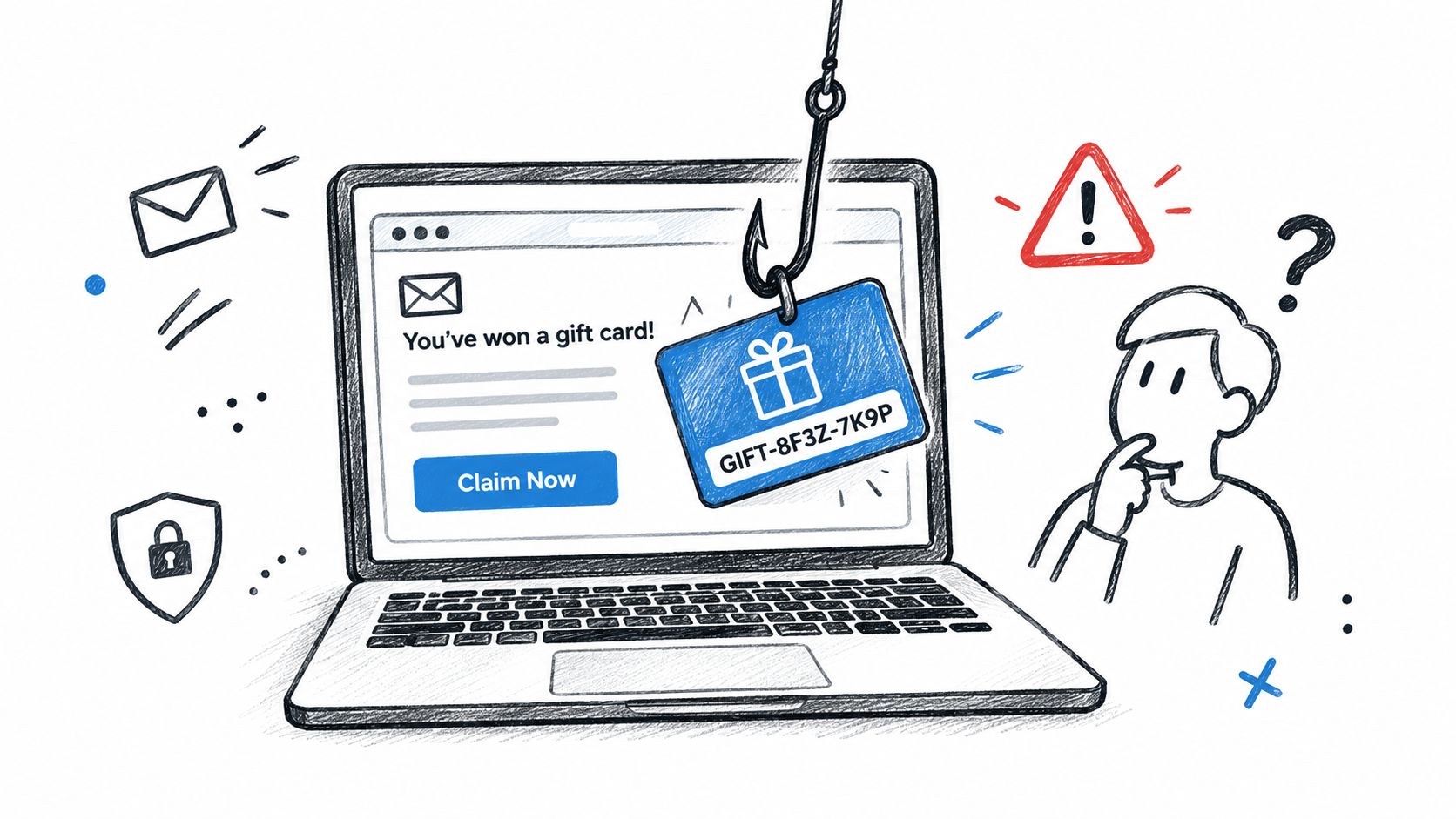
Consumers should stop the conversation, keep the code private, and contact the issuer through its verified website or phone number. The FTC advises victims to report the scam to the gift card company immediately, ask for money back, and then report it to the FTC. It also notes that some companies may help stop the scam and might refund the loss, so speed matters even though recovery isn't guaranteed. The FTC's gift card scam guidance explains that response path.
Platforms need controls for the moment after disclosure:
- Warn at redemption: Display a clear notice that legitimate support and government agencies don't demand gift cards.
- Step up new redemptions: Require MFA or an additional confirmation for new devices and unusual locations.
- Hold transfers: Delay high-risk movement of value long enough to allow a customer dispute.
- Detect unfamiliar access: Review VPN, proxy, device, and geography changes alongside redemption behavior.
- Restore compromised balances: Create a documented recovery process that preserves evidence and limits repeat abuse.
Consumer rule: A legitimate support agent may help you secure an account. They won't need your gift card PIN to do it.
7-Point Gift Card Scam Comparison
| Attack Type | Implementation Complexity | Resource Requirements | Expected Outcomes | Ideal Targets / Use Cases | Key Advantages |
|---|---|---|---|---|---|
| Fraudulent Gift Card Purchase via Stolen Payment Methods | Medium, needs payment data and timing coordination | Stolen cards/payment credentials, rapid checkout tools, resale channels | Chargebacks, direct revenue loss, elevated merchant fees | SaaS checkout flows that sell gift cards or incentives | Fast cashout, works across platforms, hard to trace after redemption |
| Account Cycling with Burner Emails for Promotional Gift Cards | Low, easy to automate mass signups | Disposable emails, device tokens/proxies, simple automation | Drains promo budget, inflates acquisition metrics, low lifetime value | New-user promotions, trial credits, welcome vouchers | Easy and cheap to scale, minimal technical skill required |
| Fake Gift Card Redemption for Money Laundering | High, requires coordination and obfuscation | Large illicit funds, shell accounts, cross-border networks, resale channels | Converts dirty funds to seemingly legitimate transactions; regulatory exposure | Platforms that allow high-value redemption/trading of gift cards | Quickly converts illicit proceeds into liquid assets; platforms act as intermediaries |
| Refund Fraud Using Gift Cards as Intermediaries | Medium, exploits refund and dispute windows | Fraudulent/legitimate purchases, dispute filings, coordinated redemption timing | Double loss (refund + chargeback), higher dispute ratios, operational burden | Platforms with separate refund/redemption systems or lenient policies | Bypasses siloed controls; effective when reconciliation is slow |
| Gift Card Balance Checker Exploitation and Harvesting | Low, largely automated and script-based | Bot scripts, proxies/rotating IPs, access to balance-check endpoints | Harvested valid codes for resale, reputational damage, increased support load | Retailer APIs or public balance-check endpoints, merchants with weak rate limits | Very low cost, highly scalable, easy to automate |
| Reselling Stolen Gift Cards Across Multiple Platforms | Medium–High, requires multi-channel coordination | Stolen code inventory, many reseller accounts, marketplaces, proxies | Large-scale monetization of stolen codes, cross-platform diffusion that complicates takedown | Marketplaces, reseller networks, social media channels | Maximizes revenue per code by diversifying sales channels |
| Social Engineering and Phishing for Gift Card Codes | Low–Medium, relies on human factors and campaign quality | Phishing infrastructure, email/SMS lists, social engineering skill | Compromised user accounts, stolen codes, customer trust erosion and chargebacks | End users, support channels, less tech-savvy demographics | High success vs non-technical victims with minimal technical resources |
Turn Scam Signals Into Fast Decisions
Gift card scams become harder to contain when each team sees only one stage. The checkout team sees authorization, customer support sees a refund request, and trust and safety sees a suspicious login. A response program should connect those events into one timeline, then choose an action that matches the evidence.
Consumers have a short, practical sequence. Stop communicating with the person demanding payment, don't share the code or receipt, and don't buy another card to “fix” the first one. Contact the issuer or platform through a verified channel, ask whether the balance can be frozen or recovered, preserve receipts and messages, and report the incident to the appropriate regulator. The FTC specifically recommends contacting the gift card company right away, asking for money back, and filing a report with the FTC through its consumer guidance.
Merchants need reconciliation across the entire lifecycle. Compare the payment artifact with the purchaser, delivery destination, activation event, redemption, transfer, refund, and dispute. A transaction that looked acceptable at checkout can become clearly risky when a refund follows immediate redemption or when several accounts share the same card fingerprint.
Platforms should screen inline before signups, trial starts, checkouts, and logins commit. They should retain linked evidence, return a clear allow, review, or block outcome, and send ambiguous cases to a review queue instead of forcing every decision into an automated yes or no.
Use this compact decision checklist:
- Payment-artifact reuse: Is one card fingerprint or payer wallet funding unrelated gift card activity?
- Burner-account clusters: Are new emails appearing with the same device, wallet, timing, or redemption behavior?
- Unusual redemption: Did a new account redeem or transfer value immediately from a new device, location, or proxy?
- Balance-check velocity: Is one identity testing many codes with automated timing or repeated failures?
- Refund timing: Did a refund request arrive soon after purchase, redemption, transfer, or a prior dispute?
Portreeve can help platforms evaluate these events before they become irreversible. Its Verdict API returns an allow, review, or block decision with reason codes, while its abuse graph links hashed, tenant-scoped identity keys such as email, device token, card fingerprint, and payer wallet. It can support screening at signups, checkouts, trials, and logins, but it won't solve every consumer-side phishing incident. Human education, issuer response, secure retail handling, and recovery procedures remain essential.
Portreeve provides inline screening for signups, trials, checkouts, and logins, connecting gift card risk signals across devices, emails, and payment artifacts before value moves. Visit Portreeve to evaluate allow, review, or block decisions for your platform and build a faster response path for linked abuse.